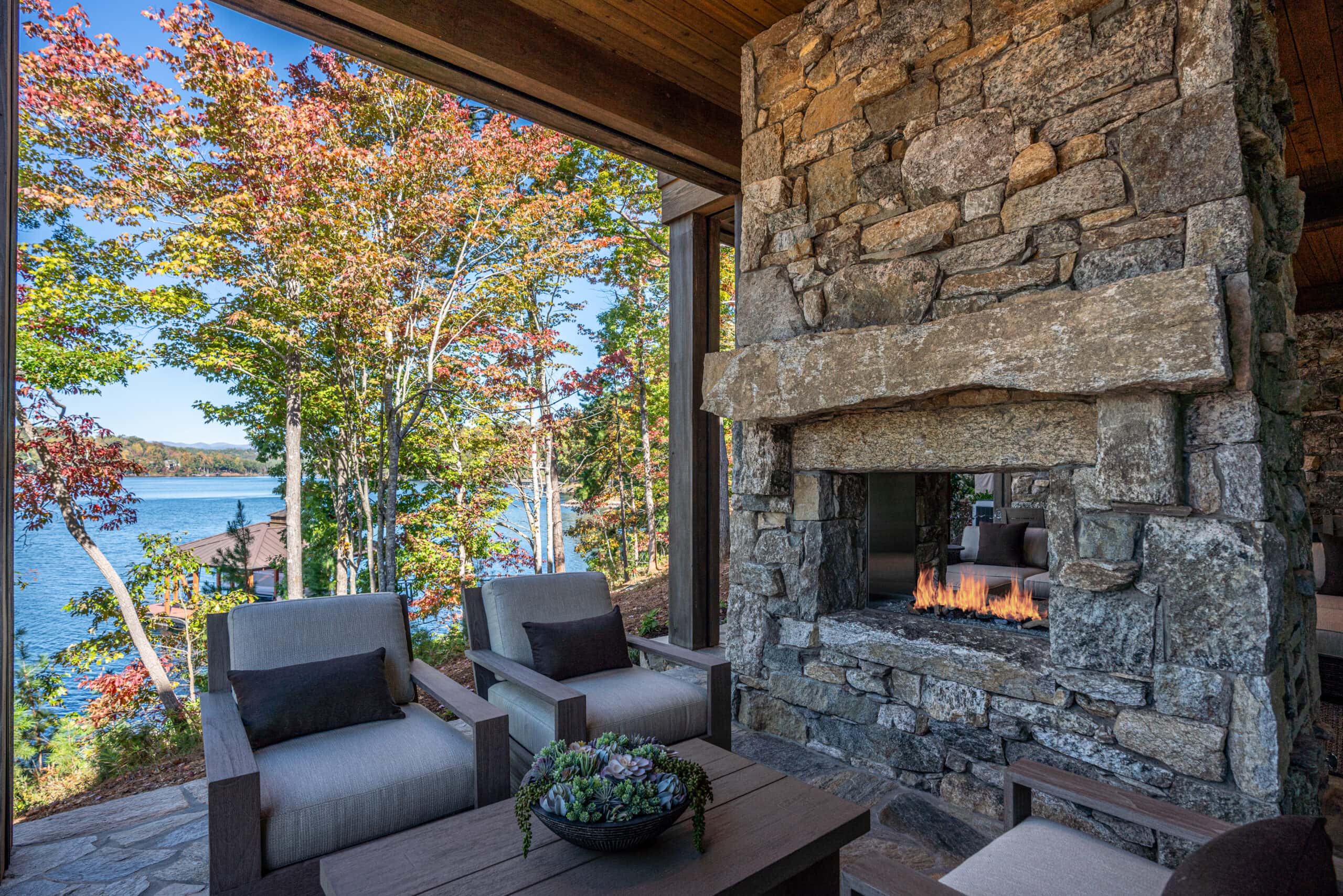
A cool evening on the porch looks different with a fire going. Conversations slow down, guests linger, and a patio that sat empty after summer becomes the place everyone wants to be. In the Upstate, where fall color rolls across the Blue Ridge and cool evenings stretch well into spring, an outdoor fireplace earns its place in a custom home.
At Ridgeline Construction Group, we plan outdoor living spaces alongside the home itself, so the fireplace suits the architecture, the site, and the way you entertain. Our team is here to walk you through the style, material, placement, and safety decisions worth settling before construction begins.
Why Add an Outdoor Fireplace to Your Luxury Home
A fireplace changes how a property looks and how often it gets used. Here is why so many homeowners put one on their list.
A Natural Focal Point
Every outdoor space benefits from a clear focal point. A fireplace gives the eye somewhere to land and gives the seating area a reason to exist. A well-proportioned chimney also adds height and structure to a flat yard or terrace.
More Living Space in More Months
Warmth stretches the usable season. Porches and patios that go quiet by October stay in rotation through the cooler months, so the square footage you’ve invested in gets used for more of the year.
A Gathering Spot for Entertaining
Guests drift toward a fire on their own. Add built-in seating, a bar top, or an outdoor kitchen nearby, and a single area can handle cocktails, dinner, and late-night conversation.
Added Value for Your Home
Finished outdoor living areas catch the attention of buyers in the luxury market. A masonry fireplace is a permanent part of the property, and it adds a sense of place that portable fire features can’t match.
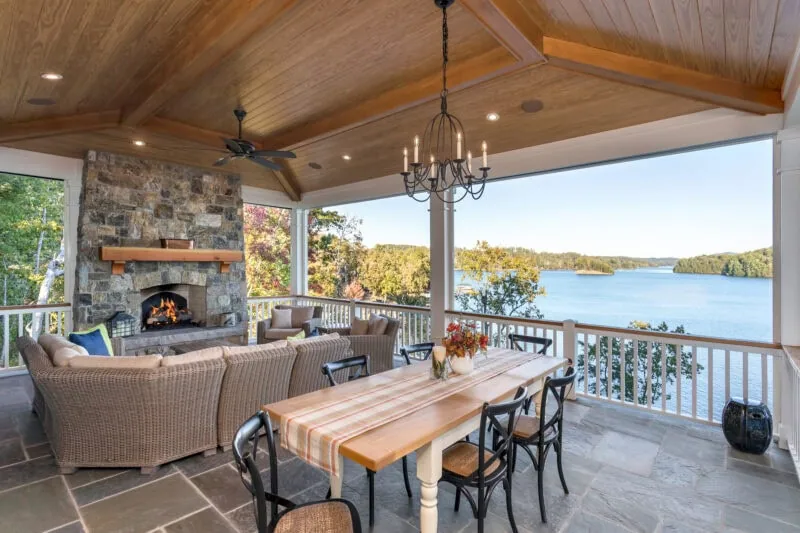
Choosing a Fireplace Style That Complements Your Home
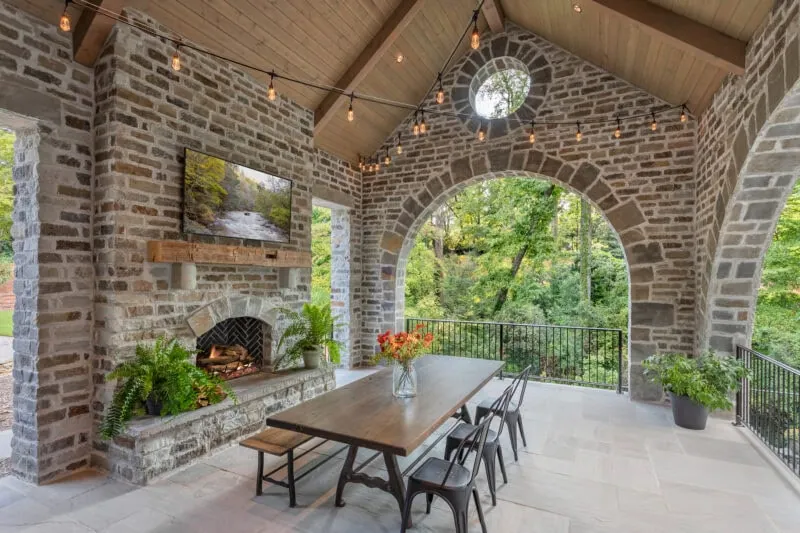
The best outdoor fireplaces look like part of the original architecture, so start with the home itself. A mountain-style residence with timber beams and stone accents pairs well with a substantial stone chimney and a hefty mantel.
A contemporary home calls for clean lines, a low linear profile, and restrained detailing. Traditional and Mediterranean homes often suit a more formal surround with classic proportions.
Scale deserves equal attention. An oversized fireplace overwhelms a modest patio, and a small one gets lost on a large terrace. We look at porch ceiling height, seating size, and the surrounding landscape to find the right fit.
Wood-Burning or Gas?
Wood delivers the crackle, the scent, and the ritual of building a fire. It also calls for a properly sized chimney, space to store firewood, and regular ash cleanup. Gas lights with a switch or remote, produce no ash or smoke, and often work better on covered porches.
Some communities and local ordinances limit wood burning, so check before you settle on a fuel. Many homeowners pair a gas fireplace on the porch with a wood-burning fire pit in the yard.
Built-In Features for Entertaining
Planning includes deciding whether you want a television, speakers, accent lighting, outlets for heaters, a wood-storage niche, built-in benches, a pizza oven, or an outdoor kitchen close by. Each one requires wiring, conduit, gas lines, or structure that must be in place before the masonry goes up.
Adding them later means cutting into finished stone. Our design-build approach brings these decisions into the plans early, which keeps the finished fireplace clean and change orders to a minimum.
Outdoor Fireplace Materials to Consider
The material you choose sets the look of your fireplace and determines how it ages.
Natural Stone for Texture and Depth
Natural stone offers the widest range of color, size, and shape, which is why it suits mountain and lake homes so well. Matching the stone on your house or hardscape ties the fireplace to its surroundings. Stone veneer over a block structure delivers the same appearance with a lighter build.
Brick for a Traditional Look
Brick feels at home beside a brick exterior and brings classic character to traditional designs. Color varies by region because of local clay, so matching an existing wall can take some sourcing. Brick fireplaces are typically wood-burning and lean toward linear shapes.
Concrete for Clean, Modern Lines
Concrete suits contemporary architecture, with crisp edges and a smooth, minimal profile. It is non-combustible and can be stained, smooth-finished, or board-formed for added texture. Ask your builder about control joints and sealing, since concrete can develop hairline cracks over time.
Stucco for Mediterranean Style
Stucco pairs naturally with Mediterranean, Spanish, and Tuscan-inspired homes and can be tinted to match your exterior. It is non-combustible and can be sculpted into curves and arches that other materials can’t achieve. A skilled finish and proper sealing make the difference in how well it ages.
Where to Place Your Outdoor Fireplace
Placement decides how often you will actually use your fireplace, so it deserves attention before the plans are final.
Frame the Views
Face your seating toward the mountains or the water rather than the neighbor’s yard. Consider the view from inside, too. Your fireplace may be visible from the kitchen and great room windows, so it should look as good from there as it does from the patio.
Account for Wind and Smoke
A fireplace that sends smoke into the seating area quickly goes unused. Pay attention to the prevailing breeze on your site before settling on a location.
Leave Room to Gather
Mark out the layout with chairs before construction begins. Guests need space to sit comfortably, move around the fire, and reach doors, grills, and the bar without squeezing past one another.
Know the Clearances
Overhangs, trees, siding, and rooflines all affect where a fireplace can go. Local codes set minimum distances from the house, and a fireplace beneath a covered porch carries stricter requirements than one on an open terrace.
Gas lines, footings, and electrical runs get set early, so we confirm placement before layout and permitting. Many of the communities we build in around Lake Keowee and Greenville also have design review requirements, which makes early planning even more valuable.
Safety and Maintenance Tips for Your Outdoor Fireplace
Ventilation is the first safety consideration, and it gets settled during design. A wood-burning fireplace needs a properly sized flue and firebox to draw well, and a fireplace on a covered porch needs extra attention to clearance and airflow. Your builder should confirm both before construction starts.
Everyday Safety
Pull permits and follow local code. Keep a fire extinguisher or hose within reach, never leave a fire unattended, and keep cushions, furniture, and overhanging branches clear of the opening.
Wood-Burning Care
Burn dry, seasoned firewood and store it off the ground and away from the house. Have the chimney inspected and swept every year, since creosote buildup is a fire hazard. Clear out the firebox each spring and wash the masonry with mild soap and water.
Gas Fireplace Care
Check burners and connections each season and keep them free of debris and cobwebs. Leave gas line repairs to a licensed professional.
Plan Your Outdoor Fireplace with Ridgeline
An outdoor fireplace works best when it is planned alongside the house, while placement, gas lines, wiring, and structure can still be coordinated on paper. Ridgeline Construction Group builds custom homes in Greenville, Lake Keowee, and across the Upstate, and outdoor living is a regular request.
Browse our portfolio to see outdoor spaces we’ve built, then contact our team to start planning yours.